2026 Sobriety Journal: Canva Templates for KDP Publishing
If you're building a KDP publishing business or working on personal recovery projects, the 2026 Sobriety Journal Canva Kdp template set offers a practical starting point. These aren't just empty pages—they're structured tools designed to support behavioral change, track progress, and build lasting habits. The templates combine thoughtful layout design with functional recovery content, making them useful for both commercial publishers and individuals working on their own journey.
What sets this collection apart is how it bridges the gap between professional print-ready design and deeply personal content. The templates are built around established recovery frameworks like the Stages of Behavioral Changes, the 12 Steps, and relapse prevention planning. Each page serves a purpose, and the Canva customization means you can adapt the look without starting from scratch.
What Makes the 2026 Sobriety Journal Templates Different
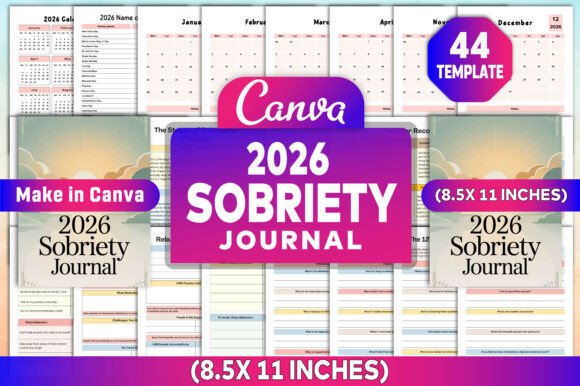
Most journal templates focus on aesthetics first—beautiful backgrounds, decorative elements, trendy typography. The 2026 Sobriety Journal KDP Creations take a different approach. These templates prioritize function while still offering clean, professional design. The 44 premium layouts cover everything from exercise and nutrition tracking to SMART goals and relapse drift charts. Every page type serves a specific recovery need.
Visually, the templates lean toward a clean, approachable style. Think generous white space, clear section headers, and subtle structure lines that guide the eye without overwhelming the content. The design personality is supportive rather than clinical. It feels like a compassionate tool rather than a medical form. This balance matters—people using a sobriety journal need structure, but they also need space to breathe.
The format is 8.5 x 11 inches US Letter, which is standard for KDP print books. At 300 DPI resolution, the output is crisp enough for professional printing or digital distribution. You get PDF, JPG, and PNG formats, which gives flexibility depending on whether you're publishing through KDP, selling digital downloads, or sharing with a coaching group.
Who Benefits From These Templates
The audience for sobriety journals is broader than many publishers realize. Addiction recovery professionals and counselors can use these templates to create workbooks for clients. Life coaches and wellness practitioners can customize them for group programs. Individual users working through recovery on their own terms can personalize a journal that fits their specific journey. And KDP publishers can produce a high-value niche product with minimal design overhead.
For publishers, the 2026 Sobriety Journal Canva Kdp templates offer a shortcut to a professional product. The recovery content is already structured—12 steps across 12 unique pages, relapse prevention planning, behavioral change stages. You don't need to be an addiction specialist or a graphic designer. You just need to customize the branding, add your cover, and publish.
For personal users, the Canva editing means you can adjust colors, fonts, and layouts to suit your preferences. Maybe you want a more minimal look. Maybe you prefer warmer tones. The templates give you a solid foundation without locking you into a specific visual identity.
Practical Applications Across Publishing and Personal Projects
Where does this template set really shine? Let's look at specific use cases.
KDP low-content publishing is the most obvious application. The print-ready interior files eliminate the technical headaches of formatting. You upload, set your pricing, and list. The recovery niche has a dedicated audience actively searching for structured journals, and these templates are designed around proven frameworks rather than generic prompts.
Recovery coaching and therapy practices benefit from the professional layout. Counselors can brand the journal with their practice logo, print copies for clients, or offer digital versions as part of a program. The relapse prevention plan pages and drift charts provide real clinical utility.
Personal use for individuals in recovery offers the most intimate application. Someone working the 12 steps can populate the journal with their own reflections, track triggers, monitor nutrition and exercise, and set meaningful life goals. The templates become a tangible companion to the recovery process.
Digital product shops on Etsy or Gumroad can sell the editable Canva template as a digital download. Buyers get the customization power without needing design skills. This opens up a secondary revenue stream beyond print-on-demand.
Design Considerations for Maximum Impact
Typography plays a subtle but important role in recovery journals. The 2026 Sobriety Journal KDP Creations templates are built in Canva, which means you have access to the full Canva font library. Choosing the right typeface affects readability, mood, and brand perception.
For body text, a clean sans serif font works well. Sans serif faces feel modern, approachable, and easy on the eyes during extended writing sessions. Fonts like Open Sans, Lato, or Montserrat provide excellent legibility at standard sizes. If you want a softer feel, a rounded sans serif can add warmth without sacrificing clarity.
For headers and section titles, you have more room for personality. A serif font can ground the journal in a traditional, trustworthy aesthetic. Something like Playfair Display or Merriweather adds a sense of weight and authority. Alternatively, a handwritten font used sparingly for section openers or inspirational quotes can inject a personal, human touch. Just keep handwriting elements limited—large blocks of script become fatiguing to read.
The key is font pairing. Match a readable sans serif for body text with a complementary serif or display font for headings. This creates visual hierarchy without jarring transitions. The templates themselves provide a starting point, but customizing font choices in Canva lets you align the journal with your brand identity or personal taste.
Color also matters. Sobriety journals typically benefit from calming, grounded palettes. Deep blues, forest greens, warm grays, and muted earth tones create a safe, reflective atmosphere. Avoid overly bright or aggressive colors. The templates give you the structure—you bring the color story.
Practical Guidance for Choosing and Customizing
When evaluating the 2026 Sobriety Journal Canva Kdp templates for your project, consider a few practical factors.
First, assess the content fit. Do the 44 pages cover what your audience needs? The set includes exercise and nutrition trackers, life goals pages, SMART goals worksheets, relapse prevention plans, and the 12 steps. If your niche requires additional pages—say, a medication tracker or a daily mood log—you'll need to add those yourself. The Canva customization makes this straightforward, but it's worth planning ahead.
Second, review the layout density. Some users prefer more guided journaling with prompts and checkboxes. Others want open space for free writing. The templates strike a middle ground, but you can adjust spacing and add or remove elements in Canva. If your target audience is highly structured, keep the prompts. If they need creative freedom, simplify.
Third, test the print output. Even with 300 DPI resolution, it's smart to print a test page. Check that margins don't get cut off, that text is clearly readable, and that any background elements don't interfere with journaling lines. KDP has specific trim and bleed requirements, and the templates are designed to meet them, but a physical test catches issues before you go to publishing.
Fourth, think about licensing. The templates are for creating and selling your own products. You're not reselling the template itself as a design asset. This is standard for KDP interiors. If you plan to sell the editable Canva file as a digital download, check that your intended use aligns with the license terms.
Brand Perception and Audience Trust
Sobriety journals deal with sensitive, personal content. The design choices you make communicate respect for that vulnerability. A cluttered, poorly formatted journal feels dismissive. A clean, thoughtfully structured journal signals that you take the recovery process seriously.
The 2026 Sobriety Journal Canva Kdp templates help establish that trust through consistent formatting, clear headings, and logical page flow. When a user opens the journal and immediately understands how to use each section, they feel supported rather than confused. That clarity builds confidence in both the product and the publisher.
For KDP publishers, brand consistency across multiple journals matters. If you plan to release a series of recovery journals—for different focus areas like gratitude, goal setting, or step work—using the same template structure with varied customization creates a recognizable brand family. Customers who trust your first journal are more likely to purchase the next one.
Final Recommendations
The 2026 Sobriety Journal KDP Creations with Customizable Canva Templates offer a genuine shortcut for anyone entering the recovery journal space. The content is grounded in real behavioral change frameworks. The design is functional and adaptable. The Canva editing removes technical barriers without sacrificing quality.
If you're a KDP publisher, this is a niche worth exploring. The recovery market has dedicated buyers, and structured journals consistently perform well. If you're a coach, counselor, or individual, the templates save hours of layout work so you can focus on the recovery content itself.
Download the templates, open them in Canva, and start customizing. Change the colors. Swap the fonts. Adjust the spacing. Add your branding or personal touches. The hard part—the page structure, the frameworks, the functional design—is already done. What remains is the creative work of making the journal feel like yours.