How a Daily Health Food Journal Transforms Your Wellness Routine
Staying consistent with health goals is rarely about dramatic overhauls. More often, it is about the small, daily decisions that accumulate over weeks and months. What you eat, how much you move, whether you took your medication, and even how you slept all feed into a larger picture of wellbeing. Yet, without a system to capture these details, patterns go unnoticed and progress stalls. The Daily Health Food Journal offers a structured yet flexible approach to logging these essential data points, turning fragmented habits into a coherent wellness strategy.
Why Tracking Your Daily Health Matters More Than You Think
Most people underestimate how much their daily routines vary. One day you might feel energized after a light breakfast, while another leaves you sluggish by mid-morning. Without a record, these variations remain mysterious. A Daily Health Food Journal bridges that gap by providing a dedicated space to log food intake, mood fluctuations, hydration levels, and physical activity all in one place. When you see Tuesday's low energy alongside a skipped lunch and minimal water intake, the cause becomes obvious. That awareness is the first step toward meaningful change.
Beyond simple observation, tracking creates accountability. When you know you will record your afternoon snack or your evening workout, you tend to make more mindful choices. The journal acts as a quiet partner in your health journey, gently reminding you of your priorities without judgment. Over thirty days, this consistent feedback loop rewires habits and builds momentum.
What Makes This Journal Different from Generic Planners
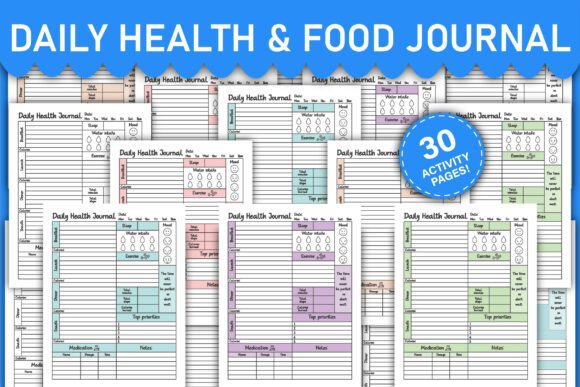
Many planners claim to support health goals but end up being too vague or too rigid. The Daily Health Food Journal strikes a practical balance. It includes thirty dedicated daily pages, each designed to capture the most relevant aspects of wellness without overwhelming the user. The layout is intentionally simple, allowing you to fill in entries quickly during a busy morning or at the end of the day.
Each page features sections for food and meal tracking, sleep duration, mood rating, water intake, and an exercise fitness log. There is also a dedicated medication tracker and a top priorities notes section. This structure ensures that nothing important slips through the cracks. Whether you are managing a chronic condition, training for a fitness goal, or simply trying to eat more vegetables, the journal adapts to your specific needs.
The Food and Meal Tracking Section
For anyone focused on nutrition, the food tracking component is the heart of the journal. Rather than requiring complicated calorie calculations or macronutrient breakdowns, it encourages you to note what you ate and how it made you feel. This qualitative approach often reveals more than numbers alone. You might discover that certain foods trigger bloating, while others sustain your energy for hours. Over time, you learn to eat in a way that supports your body rather than works against it.
Sleep, Mood, and Water Intake Tracker
These three factors are deeply interconnected. Poor sleep often leads to low mood and dehydration, while adequate water intake can improve both energy and mental clarity. The journal places these metrics side by side so you can see correlations at a glance. For example, you might notice that on days when you drink eight glasses of water, you sleep better and wake up in a more positive mood. This kind of insight is invaluable for making targeted adjustments.
Exercise Fitness Log and Medication Tracker
Physical activity is another pillar of health, and the exercise log provides space to record workouts, duration, intensity, and how you felt afterward. Whether you are a seasoned athlete or just starting with daily walks, this log helps you monitor progress and avoid overtraining. Meanwhile, the medication tracker is a practical tool for anyone managing prescriptions or supplements. Forgetting a dose can derail progress, and having a visual record reduces that risk significantly.
Practical Benefits for Modern Lifestyles
In a world where digital distractions are constant, a printable journal offers a deliberate offline experience. The Daily Health Food Journal is available as both PDF and PNG files in high resolution, so you can print as many copies as you need or use it digitally on a tablet with note-taking apps. This flexibility is important for people who move between home, office, and travel. You can keep a printed copy on your kitchen counter and a digital version on your iPad for on-the-go logging.
The print-ready pages are designed to work with standard binders or planners. You can insert them into your existing system without hassle. Because the journal is intended for personal and commercial use, health coaches, nutritionists, and wellness bloggers can also incorporate it into their client programs or digital products. This versatility expands its reach far beyond individual use.
Who Benefits Most from This Type of Journal
The Daily Health Food Journal is not limited to one type of user. It serves a wide range of scenarios effectively.
- Daily health trackers who want a comprehensive view of their habits without juggling multiple apps or notebooks.
- Food and meal journaling enthusiasts who need a dedicated space to record meals, snacks, and associated feelings.
- Fitness and exercise loggers who appreciate a simple way to track workouts alongside nutrition and recovery metrics.
- Weight loss and wellness goal setters who benefit from seeing the full picture of their daily choices and how they align with long-term objectives.
- Medication and hydration trackers who require a reliable system to remember pills, supplements, and water intake.
- Printable planner insert users who prefer analog tracking but want the flexibility to customize their pages.
Each of these groups finds something valuable in the journal's layout. The key is that the journal does not force a one-size-fits-all approach. You decide which sections to prioritize and how detailed your entries should be. Some days you might fill every field, while other days you only log meals and mood. Both approaches work because consistency matters more than completeness.
How to Integrate the Journal into Your Daily Routine
Getting the most out of a health journal requires a simple ritual. Many users find that filling it out in the morning with a cup of coffee sets a mindful tone for the day. You can review yesterday's entries, note any patterns, and set your top priorities for the coming hours. Then, throughout the day, you add food and water intake as it happens. At night, a quick recap of exercise, medication, and sleep quality closes the loop.
This rhythm takes less than ten minutes total but provides a wealth of data over time. After the first week, you will already notice trends. After a month, you have a detailed map of your health journey that you can use to make informed decisions. The thirty-day structure is ideal for building a habit, and once you complete one journal, you can print another set and continue.
Considerations Before You Start Using a Health Journal
While the benefits are substantial, some people worry about consistency. Life gets busy, and it is easy to skip a day or two. The important thing is not to aim for perfection. Missing a day is fine; just pick up where you left off. The journal is a tool, not a test. Another consideration is privacy. If you plan to use the journal for sensitive health information, keep it in a secure place or use a digital version with password protection.
For those who prefer digital workflows, the PNG format allows you to import pages into apps like GoodNotes, Notability, or OneNote. You can write with a stylus and back up your entries to the cloud. This hybrid approach offers the best of both worlds: the structure of a printed layout with the convenience of digital storage.
Final Observations on Daily Wellness Tracking
The Daily Health Food Journal is more than a collection of pages. It is a practical system for taking control of your health in a world that often feels chaotic. By tracking food, exercise, hydration, medication, mood, and sleep in one place, you eliminate the guesswork and replace it with clarity. Over time, this clarity transforms into better decisions, healthier habits, and a deeper understanding of your own body.
Whether you are just starting a wellness journey or looking to refine an existing routine, a structured journal provides the framework you need. The thirty-day format is long enough to establish new habits but short enough to feel manageable. And with personal and commercial use rights included, you can share this resource with friends, family, or clients who might also benefit from a more organized approach to health.
Ultimately, wellness is not about perfection. It is about awareness, consistency, and the willingness to adjust. The journal supports all three. If you have been looking for a simple, effective way to track your daily health habits, this printable resource deserves a place in your routine.