Sight Words Practice: Making Early Reading Fun and Creative
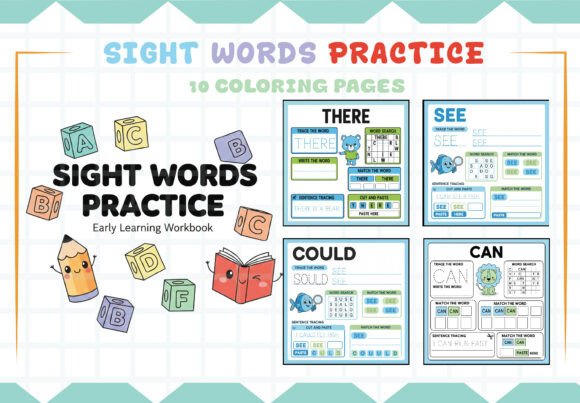
If you’ve ever watched a young child struggle to sound out the word “the” or “said” for the tenth time, you know how frustrating it can be for both of you. High-frequency sight words don’t follow phonetic rules, so kids need to memorize them by sight. That’s where Sight Words Practice comes in—but not the boring flashcard kind. Sight Words Practice Coloring Pages take those tricky words and pair them with simple, kid-friendly illustrations. Each page lets a child color while recognizing and reading words, turning repetition into a relaxed, creative activity. No drill, no pressure—just crayons and letters.
These pages are designed with bold, easy-to-color outlines so small hands stay inside the lines (mostly). Whether you’re a parent at the kitchen table, a teacher managing a literacy center, or a tutor working with ESL learners, these coloring pages offer a low-stakes way to build word recognition. Below, we’ll explore real situations where this resource shines, who benefits most, and what to consider before you hit “print.”
Where Sight Words Practice Fits Into Everyday Life
You don’t need a formal lesson plan to use these pages. Here are a few scenarios where they naturally fit:
- Morning work in kindergarten classrooms – As kids arrive, they grab a coloring page featuring a sight word like “and” or “you.” While they color, they whisper the word to themselves. By the time the bell rings, they’ve seen the word five times without even noticing.
- Quiet time at home for young siblings – A three-year-old and a five-year-old can color different pages at the same table. The older one recognizes the word and points it out to the younger one. It becomes a shared moment, not a lesson.
- ESL tutoring sessions – An older learner might feel self-conscious about reading simple words. Giving them a coloring page lets them practice in a way that feels less like “school” and more like calm, independent work. They color, they repeat, they remember.
- Car rides and waiting rooms – A parent throws a few printed pages into a bag. While waiting at the doctor’s office, the child colors and reads “can,” “see,” “look.” The activity absorbs attention and practices reading without a screen.
Preschoolers and Kindergartners
At this age, children are building the foundation for reading. They’re still developing fine motor control, so the bold outlines are forgiving. A child in pre-K who has never seen the word “the” before will start to recognize its shape after coloring it a few times. The repetition is gentle—one word per page, paired with a picture that gives context. For example, a page with the word “jump” shows a small frog leaping. The child colors the frog, traces (or colors) the letters, and connects the word to the action.
First Graders Who Need Extra Practice
By first grade, teachers expect students to read a set of sight words fluently. Some children need more exposure than a worksheet provides. Coloring pages offer a multisensory approach—seeing the word, saying it (quietly or aloud), and moving the hand to color. I’ve seen a first-grader who dreaded reading homework happily complete three pages in one sitting because it felt like art time. The word “because” no longer looked so scary after he colored the big letter B blue.
ESL and Early Readers of All Ages
English language learners often struggle with words that don’t follow standard pronunciation rules. The high-frequency word “could” is a classic example. A coloring page that pairs “could” with a picture of a child holding a pet lets the learner connect the word with a concept. The simple illustration reduces the mental load—no need to decode, just absorb. Over time, the word becomes automatic.
Practical Ways to Use These Pages
If you decide to try Sight Words Practice Coloring Pages, you’ll probably want to integrate them into your routine. Here are some approaches based on real usage:
- Word-of-the-day station – Pick one page each morning. The child colors it, then finds the same word in a book later. “I found ‘he’ in my story!” That recognition is the goal.
- Fine motor warm-up – Before handwriting practice, let the child color a sight word page. The coloring warms up their fingers and puts the word in their mind. Then when they write it, they’re more likely to recall the spelling.
- Group activity in a literacy center – Place several pages in a basket. Children choose one, color it, and then pair up to “read” each other’s words. They take turns showing the page and saying the word aloud. Peer learning builds confidence.
- Reward that isn’t a toy – When a child finishes a reading session, let them pick one coloring page as a treat. They still practice reading—but it feels like play.
What to Keep in Mind Before Using These Pages
No single resource is perfect for every child. Here are some considerations I’ve noticed from parents and teachers:
- Not a complete reading curriculum – These pages reinforce recognition and provide practice, but they don’t teach phonics or decoding. Children still need explicit instruction in letter sounds and blending. Think of coloring pages as the “fun repetition” layer, not the foundation.
- Print quality matters – Bold outlines work best when printed on decent paper. If the lines are too thin or blurry, kids may get frustrated coloring inside them. A high-quality PDF or original printing ensures the illustrations stay clear.
- Overuse can lead to boredom – While the pages are engaging, using them too often without variety might make them lose appeal. Rotate pages, mix in different themes (animals, vehicles, etc.), and don’t force it. If a child isn’t in the mood, put it away.
- Track progress loosely – Some children will memorize the word after one or two pages. Others need many repetitions. That’s fine. Keep a stack of previously colored pages and occasionally flip through them. Ask, “Do you remember this word?” The visual cue of their own art helps retention.
Strengths That Stand Out
After watching several children use these pages, a few strengths become clear:
- Low prep for adults – Print and hand over. No cutting, laminating, or setting up games. Busy parents and teachers appreciate that.
- Combines motor skills with reading – Coloring strengthens finger muscles needed for writing. Instead of doing separate activities for fine motor and reading, you get both in one.
- Works across different settings – A quiet homeschool room, a bustling kindergarten class, a one-on-one ESL session—all work well. The pages are adaptable because they’re self-directed.
- Builds emotional connection to words – When a child colors a page for the word “love,” they may associate the word with the heart-shaped illustration and the act of coloring it. That emotional hook can make the word stick.
Potential Limitations to Be Aware Of
No resource is flawless. Here are a few limitations that might matter depending on your situation:
- Doesn’t suit kinesthetic learners who need movement – Some children learn best by jumping, clapping, or building with blocks. Sitting and coloring won’t engage them as well. For those kids, use the coloring page as a side activity, not the main practice.
- May be too simple for older struggling readers – A third-grader who is behind in reading might feel the coloring pages are “babyish.” If that’s the case, consider using them as a quick warm-up or skip them entirely. Older learners might prefer a more mature-looking format.
- Requires adult modeling initially – A child who doesn’t know the word may just color randomly without looking at the letters. Show them how to say the word first, trace the letters with a finger, then color. After a few sessions, they’ll do it independently.
Making the Most of Sight Words Practice at Home or School
I’ve found that the best results come when you treat these pages as part of a broader reading routine. For example, in a kindergarten classroom, the teacher might introduce the word “are” during a morning meeting, then send students to a literacy center where a coloring page awaits. At home, a parent might read a short book with the word “said” appearing several times, then offer the “said” coloring page afterward. The repetition across contexts—hearing, seeing, coloring—cements the word.
Another observation: children enjoy “growing” their collection. Some teachers create a personal sight word notebook for each student. Every time a child masters a word, they color the corresponding page and add it to the notebook. Over time, the notebook becomes a colorful record of progress. The child feels proud flipping through pages and seeing how many words they know.
If you work with preschool-age children, consider using the pages to introduce one word per week. Focus on the most common words first: “the,” “a,” “I,” “to,” “and,” “is.” Keep the pace slow. At this age, recognizing three to five sight words by the end of the school year is a win. The coloring pages make the process gentle and frustration-free.
For ESL learners, pair the page with a verbal activity. After the child colors “help,” ask them to tell you a time they needed help. The personal connection transforms the abstract word into something meaningful. You can also use the pages for conversation prompts: “What color is the cat? What is the cat doing?” The illustration supports speaking skills alongside reading.
Final Thoughts on Choosing Sight Words Practice Coloring Pages
When you pick up a set of these pages, you’re choosing a tool that prioritizes engagement over drudgery. It won’t replace a teacher’s guidance or a structured phonics program, but it fills a specific need: giving children repeated exposure to high-frequency words in a way that feels creative and safe. The best use cases are those where a child needs extra practice without extra pressure.
Whether you’re a parent trying to support early reading at the kitchen counter or a teacher managing a room of twenty lively five-year-olds, the simplicity of “print and color” is hard to beat. Watch a child color the word “look” while drawing eyes on the picture, or color “my” while adding a toy to the illustration—you’ll see the word become theirs. That ownership is the foundation of reading confidence.
And if you need a moment of quiet in a busy day, a child quietly coloring with a crayon and whispering “and… and… and” is a small victory worth having.