The 2026 Shopify Store Blueprint
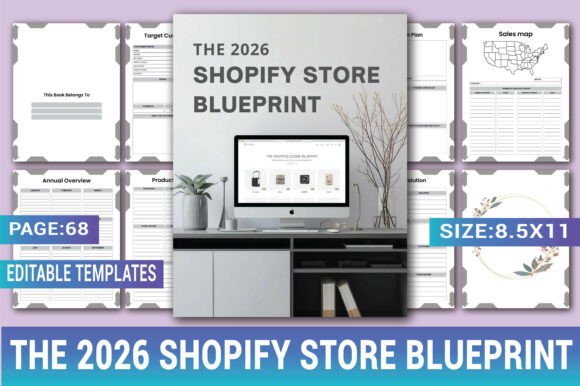
Running a Shopify store can feel like juggling a dozen spinning plates at once. One minute you're deep in product research, the next you're wrestling with inventory counts, and somewhere in between you're supposed to be planning a marketing campaign that actually converts. It's a lot. That's where The 2026 Shopify Store Blueprint steps in — not as a rigid rulebook, but as a flexible companion that helps you keep everything in one place without the mental clutter.
Think of it as the notebook you wish you had from day one. It's designed for entrepreneurs who want to move beyond scattered notes, random spreadsheets, and that nagging feeling that something important is slipping through the cracks. Whether you're mapping out your first product launch or trying to get a handle on your third quarter growth, it gives you a structure that actually works with how you think and operate.
For the Solo Founder Who's Wearing Every Hat
If you're building your Shopify store on your own, you know the drill. You're the product researcher, the customer service rep, the social media manager, and the bookkeeper — all before lunch. The 2026 Shopify Store Blueprint becomes your second brain in that scenario. It's not about adding more work to your plate; it's about replacing the chaos with a single system that tracks everything from idea validation to monthly expenses.
Imagine sitting down on a Sunday evening with a coffee, opening your planner, and running through the monthly planning pages. You jot down the three biggest priorities for the week ahead, check where you stand on your current product research, and note any marketing campaigns that need attention. That clarity alone can save hours of mental energy during the week. Instead of constantly switching between tabs and apps, you have one place to land, review, and adjust.
One thing I've noticed with solo founders is that the pre-launch phase feels especially heavy. You're questioning your product idea, second-guessing your target audience, and wondering if anyone will actually buy what you're offering. The Target Customer Market Research section in this planner gives you a structured way to work through those doubts. You can define your ideal customer, outline their goals and challenges, and articulate your unique value proposition in a way that feels concrete — not just abstract theory. That alone can turn a fuzzy idea into something you feel confident moving forward with.
The Growing Store Owner Looking for Consistency
Maybe you've already launched your store and you're past the initial rush. Sales are coming in, but things feel a little loose. You're not sure if your marketing spend is actually paying off, or if that one supplier is quietly raising prices on you. This is where The 2026 Shopify Store Blueprint shifts from a launch tool into a growth engine.
For store owners who are scaling, the Finance, Income Expense Tracking pages become especially valuable. You can log your pre-launch costs, track ongoing spending, and get a real-time sense of whether your margins are healthy. It's one thing to have a vague idea of your numbers; it's another to see them written down in a consistent format that lets you compare month over month. That kind of visibility helps you make smarter decisions about pricing, inventory orders, and which marketing channels deserve more of your budget.
I've seen store owners use the Marketing Campaign Tracking section to run honest post-mortems on their ads. Instead of guessing why a campaign underperformed, they can look back at the notes they made during the planning phase — target audience, budget, content angles — and compare it to what actually happened. That feedback loop is gold. It turns every campaign into a learning opportunity, not just a win-or-lose situation.
Inventory management without the spreadsheet chaos
Inventory can be one of the most stressful parts of running a store, especially if you're dealing with multiple suppliers or seasonal products. The Inventory Order Management pages let you track stock levels, order dates, supplier details, packaging choices, and fulfillment timelines all in one view. That means fewer "Wait, did I order enough of that?" moments, and more confidence when you're planning promotions or new product drops.
One store owner I spoke with mentioned that before using a planner like this, they would often over-order on slow-moving items and run out of bestsellers right before a big sales weekend. Having a dedicated space to review reorder points and supplier lead times helped them balance their inventory much more effectively. It's a small shift, but it can save significant money and stress over a year.
Product Research That Feels Less Like a Shot in the Dark
Coming up with product ideas is exciting. Validating them? That's where most people get stuck. The 2026 Shopify Store Blueprint includes a Product Research Planning section that walks you through comparing competitors, tracking features, and planning launches in a structured way. Instead of relying on gut feelings or hoping something sticks, you can build a case for each product you consider bringing to market.
For example, let's say you're in the home goods space and you're considering launching a line of sustainable kitchen tools. You can use the research pages to compare three or four competitors, note what they're doing well, identify gaps in their offerings, and define how your product will be different. Then you can track the timeline for sourcing, sampling, and launching. By the time you're ready to hit "publish," you have a clear story for why this product exists and who it's for. That confidence shows in your product descriptions, your marketing, and ultimately in your conversion rates.
This is especially useful for store owners who are exploring multiple niches or thinking about expanding their product line. The planner gives you a framework to evaluate each idea without getting overwhelmed by options. You can keep all your research in one place, revisit it as you learn more, and make decisions based on evidence rather than impulse.
Different Industries, Same Practical Foundation
The beauty of The 2026 Shopify Store Blueprint is that it doesn't assume you're selling one specific type of product. Whether you're in fashion, home decor, digital downloads, or specialty foods, the structure adapts to your needs. The Shop Launch Go-To-Market Checklists are broad enough to apply to any niche, yet detailed enough that you won't forget the essentials — like setting up shipping zones, writing your return policy, or configuring tax settings.
I've seen a handmade jewelry maker use the monthly planning pages to schedule product drops around craft fair seasons. Meanwhile, a print-on-demand store owner used the marketing campaign tracker to plan a full quarter of TikTok content around trending designs. The same tool, two completely different approaches, both getting value from the same core structure.
What to consider before diving in
No tool is a magic bullet, and The 2026 Shopify Store Blueprint is no exception. If you're someone who prefers fully digital workflows or who already has a robust system in place, you might find the physical planner format less convenient. It requires regular engagement to be effective — filling out pages, reviewing your notes, and actually using the checklists rather than just flipping through them once.
Also, while the planner covers a broad range of functions, it's designed to be a companion rather than an all-encompassing business management system. You'll still need your Shopify admin panel, your analytics tools, and maybe a separate accounting platform for deeper financial reporting. The planner excels at giving you a bird's-eye view and helping you stay consistent, but it doesn't replace the operational tools you already rely on.
Another consideration is your planning style. The yearly and monthly calendars are structured, but they leave room for you to fill in what matters most to your business. If you prefer highly guided prompts with very specific instructions, you might wish for more cues in certain sections. But if you appreciate a framework that gives you direction without micromanaging your process, this strikes a nice balance.
For those who are just starting out, the sheer range of sections might feel a bit overwhelming at first. My advice is to not try to use every page immediately. Start with the parts that feel most urgent — maybe the product research or launch checklist — and let the other sections grow into your routine as you settle in. The planner is meant to grow with you, not demand that you have everything figured out on day one.
The Underrated Value of Writing Things Down
There's something about physically writing down your goals, your numbers, and your ideas that makes them feel more real. The 2026 Shopify Store Blueprint leverages that in a practical way. When you write your monthly action plan by hand, you're more likely to follow through than if you type it into a note that gets buried in a folder. The act of committing something to paper reinforces your intention and makes it easier to revisit later.
I've noticed that store owners who use a structured planner tend to be more reflective about their business. They're more likely to catch small issues before they become big problems — like a slow month in sales prompting a review of their marketing spend, or a supplier delay leading to an adjustment in the launch timeline. That kind of consistent review is hard to maintain without a system that gives you a natural cadence for checking in.
If you're someone who thrives on having a clear picture of where your business is heading, this planner gives you that perspective. It turns the messy, unpredictable journey of running a Shopify store into something you can actually manage week by week, month by month. You still have to do the work, but at least you know where to focus your energy.
The 2026 Shopify Store Blueprint isn't about promising overnight success. It's about giving you a clearer path through the daily decisions that add up over time. Whether you're sketching out your first product idea or fine-tuning your fourth quarter strategy, it offers a way to keep the important things visible and the noise at a manageable level. And for anyone running a store, that kind of clarity is worth a lot.