1000 Daily Productivity AI Prompts Plan
Most productivity systems fail because they focus on what to do without addressing how to think. You can have the best to-do list in the world, but if your mind is scattered, your priorities unclear, or your energy drained, that list becomes a source of guilt rather than progress. The 1000 Daily Productivity AI Prompts Plan tackles the root cause by guiding your thinking before your action. It is a structured, prompt-based system that moves you from reactive busyness into intentional, focused work.
What makes this approach different is its completeness. It covers every phase of a productive day: setting direction in the morning, protecting deep work, managing time, overcoming resistance, sustaining momentum, building habits, and reflecting in the evening. Each phase contains prompts that act like a coach asking the right question at the right moment. Over weeks of consistent use, these questions rewire how you approach your work. You stop defaulting to urgency and start choosing what matters.
A Planner That Thinks With You
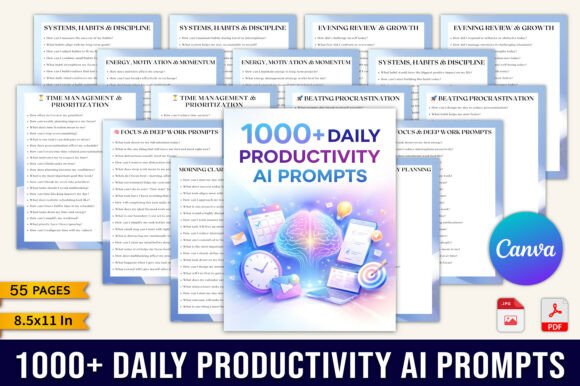
The plan is built around 1000 structured prompts, organized into seven core sections. These are not random questions. They are sequenced to create a natural flow from intention to execution to review. The morning clarity prompts, for example, help you set a meaningful target before the day's noise arrives. The deep work prompts then protect the time and focus needed to hit that target. The evening review closes the loop, capturing what worked and what needs adjustment.
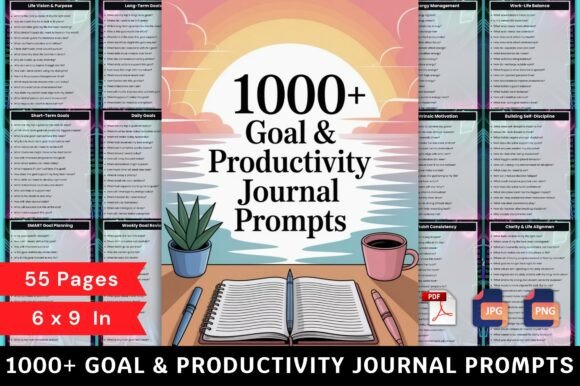
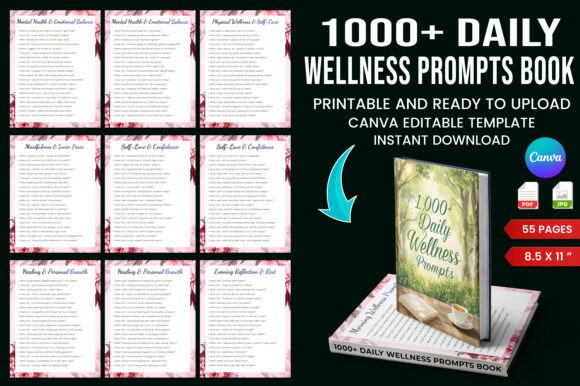
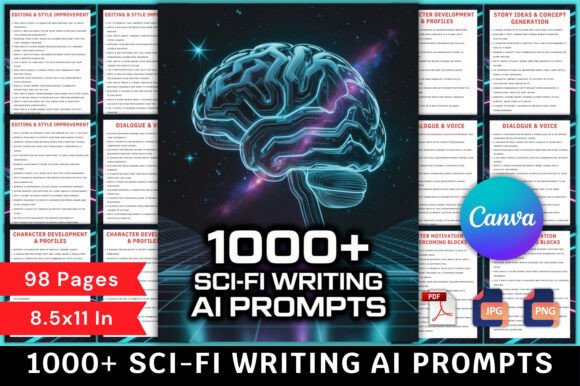
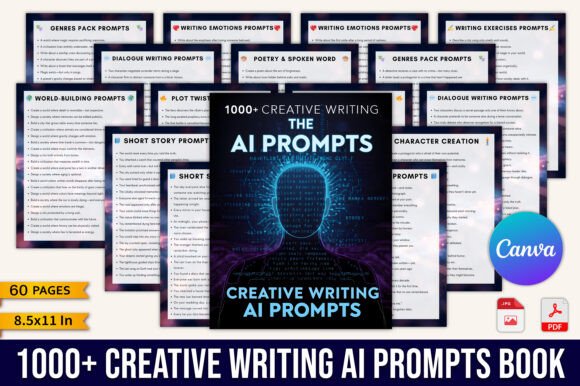
The file package includes 55 Canva templates, an editable link, and ready-to-upload PDF files at 8.5 by 11 inches. This gives you flexibility. You can work digitally, print the pages, or customize the templates to match your personal style. The design is clean and professional, which matters when you are building a daily habit. A system you enjoy using is a system you will actually use.
But the real power lies in how the prompts train your decision-making. Instead of telling you to prioritize, the prompts ask: If I only had four hours today, what would I do? Instead of telling you to stop procrastinating, they ask: What is the first physical action I can take right now? These are not abstract encouragements. They are specific mental moves that produce clarity and action.
Who Benefits Most From This System
This plan is designed for adults between twenty and fifty who juggle multiple responsibilities. Creators, designers, marketers, bloggers, entrepreneurs, educators, freelancers, small business owners, and anyone managing projects or teams will find immediate value. The prompts cut across industries because they address universal bottlenecks: scattered attention, unclear priorities, fear of starting, and difficulty sustaining focus.
For creators and designers, the morning clarity section is a game changer. Instead of opening your tools and reacting to whatever comes up, you begin with a clear creative direction. The deep work prompts then protect your best hours for the work that builds your portfolio, not just the work that fills your inbox.
Marketers and bloggers deal with constant context switching. Content calendars, campaign deadlines, analytics reviews, and social media demands can fracture attention before lunch. The time management and prioritization prompts train you to separate urgent from important and allocate your highest energy to the tasks that drive results.
Entrepreneurs and small business owners face decision fatigue daily. The systems and habits prompts help you build routines that reduce friction. When every choice is guided by a thoughtful question, you conserve mental energy for execution instead of wasting it on deciding what to do next.
Freelancers and educators often lack external structure. This plan provides that structure without being rigid. The evening review prompts, in particular, are powerful for solo workers. They create a moment of honest reflection that leads to continuous improvement, even when no one else is holding you accountable.
Creative Possibilities and Real Applications
The 1000 prompts are not a script to follow blindly. They are a toolkit you can adapt to your context. One of the most useful ways to approach this plan is to treat each section as a lens for a different part of your day.
The morning clarity section can be used as a journaling ritual. Prompts like What is the one thing that must happen today for me to feel satisfied? or What task am I avoiding, and why? force you to be honest with yourself before the day takes over. You can write your answers in the notes section, type them into a digital document, or even record them as voice memos if you prefer speed over handwriting.
The focus deep work section is ideal for the hours when you need to produce. Prompts such as What would make this session feel successful? or What is the smallest version of this task I can complete? help you start when starting feels hard. They cut through resistance by lowering the bar to entry. Once you begin, momentum often carries you further than you planned.
The beat procrastination section addresses the real reasons people stall. Procrastination is rarely laziness. It is usually fear of imperfection, lack of clarity, or overwhelm. Prompts like What would I do if I gave myself permission to do it badly? or What is one step I can take in the next two minutes? bypass the mental blocks that keep you stuck. These are not motivational quotes. They are tactical questions that produce movement.
The energy and momentum section is often overlooked but essential. Prompts such as What recharge activity will I schedule today? and What stage of this project needs the most creative energy? help you pace yourself. Sustainable productivity is not about pushing harder. It is about aligning your energy with your priorities and knowing when to rest.
Adapting the Plan for Different Goals and Contexts
One of the strengths of this system is how easily it adapts to different workflows. You do not need to follow the sections in order. You can start with the area where you struggle most and build from there.
If you are building a new habit, use the systems and habits prompts as a daily check-in. Ask yourself What small action did I take today that my future self will thank me for? and What is the minimum viable version of this habit I can maintain? These questions strip away the pressure of perfection and focus on consistency. Over weeks, the small actions compound into lasting change.
If you manage a team, the evening review prompts can transform your retrospectives. Questions like What worked well today, and why? and What would I do differently tomorrow? shift the conversation from blame to learning. They create a culture where reflection leads to improvement rather than defensiveness.
If you are working on a long-term project, use the deep work and momentum sections together. The deep work prompts help you make progress in each session, while the momentum prompts prevent burnout by encouraging regular breaks and recovery. This combination is especially useful for writers, developers, and researchers who face marathon projects.
For students or lifelong learners, the plan can structure study sessions. The focus prompts improve concentration, and the reflection prompts reinforce retention. Instead of passively reading or watching, you engage with material through structured questioning. This active approach leads to deeper understanding and better recall.
Keeping Results Clear and Consistent
A system is only useful if you maintain it long enough to see results. The 1000 Daily Productivity AI Prompts Plan is designed for consistency. The 55 Canva templates make it easy to keep your responses organized. You can create a separate template for each week or use one template repeatedly and track your progress in a dedicated notebook.
The editable link allows you to customize the prompts or reorder sections based on your priorities. If you find the evening review more useful than the morning section, adjust the sequence. This is not a fixed curriculum. It is a flexible framework that should fit your life, not the other way around.
To keep your results clear, use the notes and free writing spaces included in the plan. Write down not just your answers but also your observations. Over time, patterns will emerge. You will notice which prompts consistently produce breakthroughs and which ones you tend to skip. That data is valuable. It tells you where your resistance lives and where your growth is happening.
Review your past responses periodically. The plan is not just for daily use. It is also a record of your thinking. Looking back at how you answered a prompt three months ago can show you how far you have come and what you still need to address. This practice turns the plan into a personal productivity archive.
Practical Tips for Getting the Most Out of the Prompts
Start with one section. You do not need to use all 1000 prompts at once. Pick the area where you feel the most friction. If you struggle with starting your day with purpose, begin with the morning clarity prompts. Use them daily for a week. Let them become a ritual. Once the habit is established, add another section.
Be honest in your responses. The prompts work best when you answer them with candor. If a prompt asks What am I avoiding? and you write nothing, that is useful information too. But the real progress comes when you write the uncomfortable answer and then take action based on it. The prompts are a mirror. They show you what you already know but have not yet admitted.
Customize the language. The prompts are written in a neutral, AI-inspired style that works for a wide audience. If a prompt does not resonate, rephrase it in your own words. The goal is not to follow the plan perfectly. The goal is to think clearly and act consistently. Your version of a prompt is often more powerful than the original because it comes from your own context.
Moving From Busy to Productive
The difference between being busy and being productive is intention. Busy is reactive. Productive is deliberate. The 1000 Daily Productivity AI Prompts Plan is a tool for cultivating that deliberation. It asks the questions that lead to better decisions, deeper focus, and more meaningful progress. It does not promise shortcuts. It promises a system. And a system, used consistently, is what turns potential into results.
Whether you are a creator looking for structure, an entrepreneur trying to scale, a freelancer managing multiple clients, or simply someone who wants to make the most of each day, this plan offers a practical way forward. The prompts are your guide. The templates are your canvas. The rest is up to you. Start small, stay honest, and let the questions lead you where you need to go.