1000 Small Business Prompts Book: A Complete Guide to Smarter Entrepreneurial Thinking
Every entrepreneur knows the feeling: you stare at a blank page, waiting for inspiration to strike. The pressure to generate fresh ideas, solve complex problems, and make confident decisions can feel overwhelming. That is exactly where the 1000 Small Business Prompts Book steps in. Designed as a practical idea-generation and clarity tool, this resource helps founders, small business owners, and aspiring entrepreneurs think deeper, plan smarter, and grow with confidence—one prompt at a time.
In this article, we will explore what the 1000 Small Business Prompts Book is, why it matters for modern entrepreneurs, how it works across key business areas, and how you can use it to transform your daily operations, long-term vision, and personal mindset. Whether you are just starting out or looking to scale an existing business, this guide will help you understand the value of structured prompts and how they can unlock your best ideas.
What Is the 1000 Small Business Prompts Book?
The 1000 Small Business Prompts Book is a curated collection of one thousand thought-provoking questions and exercises designed to stimulate entrepreneurial thinking. It covers ten major themes that touch every aspect of running a small business. Each prompt is crafted to push you beyond surface-level answers and into deeper reflection, strategic planning, and actionable insight.
Unlike traditional business books that tell you what to do, this prompt book asks you what you think. It turns the lens inward and encourages you to discover your own solutions, strengths, and blind spots. This makes it not just a read but an active tool for growth.
Who Is This Book For?
- New entrepreneurs looking for a structured way to build their business foundation
- Experienced business owners who want to break through a plateau or refocus their vision
- Freelancers and solopreneurs seeking clarity on branding, pricing, and productivity
- Small business teams who need a shared framework for strategy meetings and goal setting
- Coaches and mentors who want a ready-to-use resource for guiding clients
Why Prompts Work: The Psychology Behind Idea Generation
Prompts are powerful because they overcome the blank page problem. When you face an open-ended question like “What is my biggest business challenge?” your brain immediately begins searching for answers. This focused search activates your reticular activating system—the part of your brain that filters information and brings relevant ideas to the surface.
Prompts also reduce decision fatigue. Instead of wondering where to start, you have a clear direction. Over time, this habit of answering thoughtful questions builds a mental framework for better decision-making. The 1000 Small Business Prompts Book takes full advantage of this psychological principle, offering a structured path through the chaos of entrepreneurship.
Exploring the Ten Core Themes of the Book
The book is organized into ten distinct sections, each targeting a critical area of business and personal development. Let us walk through each one to see how they contribute to a well-rounded entrepreneurial practice.
1. Entrepreneur Mindset & Motivation Prompts (🧠)
Your mindset is the foundation of everything. This section helps you examine your beliefs, fears, and motivations. Prompts like “What does success mean to me beyond money?” or “What limiting belief has held me back the longest?” push you to confront internal blocks and build a resilient entrepreneurial identity.
2. Idea Generation & Innovation Prompts (💡)
Innovation is not a lightning strike—it is a muscle. This section trains you to generate ideas systematically. You will explore questions about customer pain points, market gaps, and creative combinations. Over time, you develop a habit of seeing opportunities where others see obstacles.
3. Business Planning & Strategy Prompts (📊)
A business without a plan is a ship without a rudder. Here, you will dive into mission statements, competitive analysis, SWOT assessments, and long-term roadmaps. These prompts turn abstract strategy into concrete, written plans that you can revisit and refine.
4. Branding & Positioning Prompts (🎨)
Your brand is how the world perceives you. This section covers brand voice, visual identity, target audience, and differentiation. Example prompts include “What three words do I want customers to use when describing my brand?” and “How does my brand make people feel?”
5. Marketing & Sales Prompts (📣)
Marketing and sales are the engines of growth. These prompts help you craft messaging, choose channels, understand customer journeys, and refine your sales process. You will learn to ask better questions about your offers and how to connect with the right people.
6. Money, Pricing & Profit Prompts (💰)
Money can be a sensitive topic for many entrepreneurs. This section normalizes financial thinking by prompting you to explore pricing strategies, profit margins, cash flow management, and revenue diversification. It turns financial anxiety into financial clarity.
7. Productivity & Time Management Prompts (⏱)
Time is your most valuable non-renewable resource. These prompts help you identify time drains, prioritize tasks, set boundaries, and build systems that work. You will discover what truly moves the needle for your business and learn to say no to the rest.
8. Leadership & Team Building Prompts (👥)
Even if you are a solopreneur, leadership matters. This section covers delegation, communication, culture, and hiring. For those with teams, these prompts help you become a better manager and build a cohesive, motivated group.
9. Failure, Resilience & Growth Prompts (🔥)
Failure is inevitable, but it is also a teacher. These prompts reframe setbacks as data. You will explore questions like “What did my biggest failure teach me?” and “How can I build more redundancy into my business?” Resilience becomes a skill you actively develop.
10. Scaling, Legacy & Long-Term Vision Prompts (🚀)
Finally, this section looks ahead. Where do you want your business to be in five, ten, or twenty years? What legacy do you want to leave? These prompts encourage you to think beyond survival and into sustainable growth and impact.
Practical Ways to Use the 1000 Small Business Prompts Book
Having a thousand prompts is valuable only if you know how to use them effectively. Here are several strategies to integrate this resource into your daily and weekly routine.
Daily Warm-Up Routine
Start each day by picking one prompt at random. Spend five to ten minutes writing your answer in a journal or digital document. This sets a reflective tone for the day and keeps your business goals front of mind.
Weekly Strategy Sessions
Set aside one hour per week to work through a full section. For example, you might spend a month on Branding prompts, then move to Marketing. This deep dive helps you build expertise in one area at a time.
Team Brainstorming Meetings
If you have employees or partners, use prompts as discussion starters. Project them on a screen or share them in a shared document. Different perspectives on the same prompt can reveal blind spots and spark innovation.
Quarterly Reviews and Goal Setting
At the end of each quarter, revisit prompts from the Business Planning and Vision sections. Compare your answers from previous months to see how your thinking has evolved. This creates a measurable feedback loop for personal and business growth.
What Makes This Book Different from Other Business Resources?
Many business books offer frameworks, case studies, and step-by-step instructions. While those are valuable, they often leave little room for your own context. The 1000 Small Business Prompts Book takes the opposite approach. It provides the structure while you provide the content. This makes it endlessly adaptable to your industry, stage, and personality.
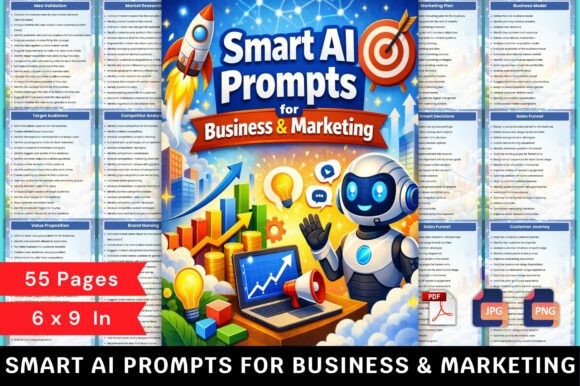
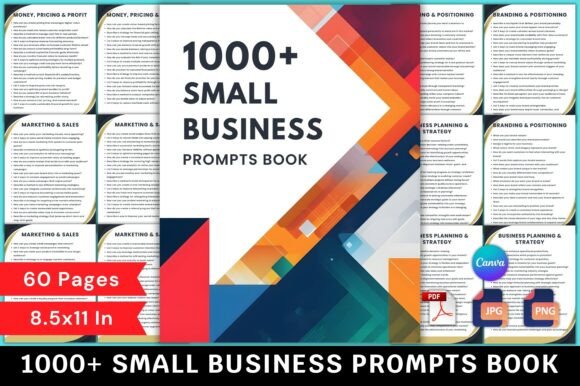
Additionally, the format is flexible. The book comes with printable high-quality PDF, PNG, and JPG files, plus a Canva editable link. You can print pages, fill them digitally, or customize them to fit your branding. The standard 8.5 x 11 inch size makes it easy to bind or store in a binder. With 60 organized pages that combine prompts with clean note-taking space, it is designed for action, not just reading.
Common Misunderstandings About Prompt-Based Learning
Some people assume that prompts are only for writers or creatives. In reality, prompts are a universal cognitive tool. Engineers, accountants, and retail owners can all benefit from structured reflective thinking. Another misconception is that you need to answer all one thousand prompts in order. You do not. You can jump around, repeat sections, and focus on what is most relevant to you right now.
Finally, do not confuse prompts with a checklist. The goal is not to complete them all but to deepen your understanding of your business and yourself. Quality matters more than quantity.
How This Book Fits Into Modern Entrepreneurship
Entrepreneurship today is fast-paced, uncertain, and information-rich. We are bombarded with advice from podcasts, social media, and online courses. The challenge is not a lack of information—it is a lack of clarity. The 1000 Small Business Prompts Book cuts through the noise by turning your attention inward. It helps you filter external advice through your own values, goals, and circumstances.
This approach aligns with modern trends like slow business, intentional entrepreneurship, and mindful productivity. Instead of hustling harder, you learn to think smarter. Instead of copying competitors, you discover your unique path.
Examples of Prompts and How They Spark Action
To give you a concrete sense of the book, here are a few example prompts from different sections, along with the kind of thinking they encourage:
- Mindset: “What would I attempt if I knew I could not fail?” — This classic question reveals your deepest aspirations without the filter of fear.
- Branding: “If my brand were a person, who would they be and why?” — This personification exercise makes abstract brand values tangible.
- Money: “What is the true cost of my lowest-priced product or service?” — This prompts you to evaluate profitability, not just price.
- Scaling: “What systems would need to be in place for me to take a month off?” — This uncovers operational gaps and dependency risks.
Each prompt is a doorway to a larger conversation with yourself. Over time, these conversations build into a robust mental model for running your business.
Final Thoughts: Who Should Invest in This Resource?
The 1000 Small Business Prompts Book is for anyone who wants to move from reactive to proactive in their business life. It is for the solo freelancer who feels stuck in a rut, the small business owner preparing for a pivot, and the ambitious entrepreneur mapping out a decade-long vision. It is also for the coach or educator looking for an evergreen tool to share with clients or students.
If you are ready to stop searching for answers and start generating your own, this prompt book offers a proven, structured path. It respects your intelligence, challenges your assumptions, and celebrates your unique journey. Explore the 📂 Files Included—the printable PDF, PNG, JPG, and Canva editable link—to see how easily you can integrate it into your workflow. Whether you print it out or use it digitally, the 1000 Small Business Prompts Book is a companion for the long haul.
Thank you for taking the time to learn about this resource. If it resonates with you, consider exploring the creator’s store for more thoughtful designs and exclusive collections. Your business deserves clarity, and clarity starts with the right question.