Fun Learning for Kids – Engaging Activity Planner for Ages 4–7
If you have spent any time helping a young child build foundational skills, you already know how quickly their attention can shift. One moment they are fully engaged in tracing a letter, and the next they are across the room chasing a toy. Fun Learning for Kids is designed to meet children exactly where they are developmentally while giving adults a practical, ready-to-use structure for guided learning. This activity planner is more than a collection of worksheets—it is a tool that slots into your existing routines and helps turn short bursts of attention into meaningful skill-building moments.
Whether you are a parent preparing your child for kindergarten, a homeschool educator mapping out daily lessons, or a caregiver looking for screen-free engagement, this planner offers a clear path forward. It is built around the abilities of children ages four through seven and covers everything from pencil control to early math logic. Below, I break down how this resource works in real life, how to weave it into your workflow, and what makes it genuinely useful for both the child and the adult guiding the process.
What Makes This Activity Planner Different
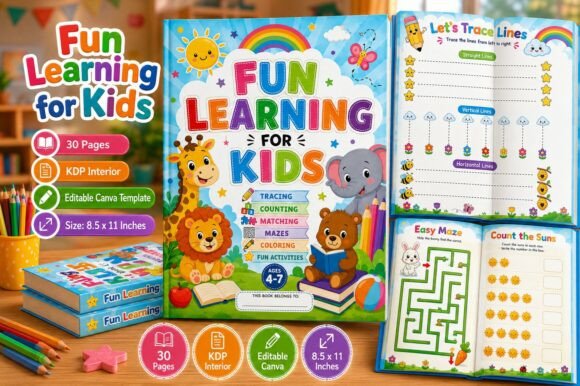
Many early learning resources fall into one of two camps: they are either rigid workbooks that feel like school, or they are purely playful with no clear skill progression. Fun Learning for Kids strikes a practical balance. It includes thirty distinct pages, each with a defined purpose, yet the activities stay playful enough to hold a young child's interest. The variety matters because children at this age thrive on novelty, but they also need repetition to master motor and cognitive skills.
Key features that stand out from a workflow perspective include:
- Line and shape tracing – Directly prepares the hand for letter and number formation without the pressure of getting it "right."
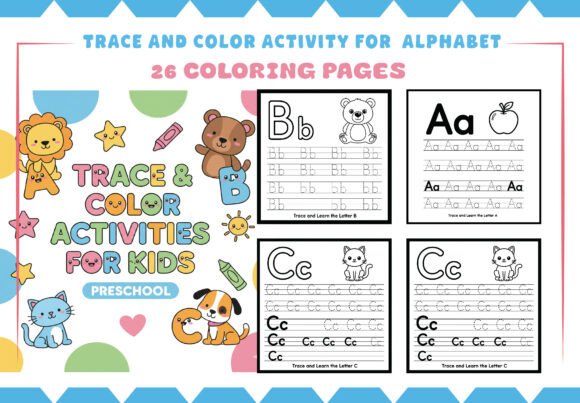
- Alphabet tracing A–Z – Supports letter recognition and phonics simultaneously, which is especially useful if you are pairing these pages with read-aloud sessions.
- Number tracing 1–20 – Builds number writing fluency before children are asked to perform calculations.
- Counting activities and count color exercises – Reinforce one-to-one correspondence while giving the child a creative outlet.
- Matching games and animal counting – Develop visual discrimination and keep engagement high through familiar themes.
- Missing number practice and biggest/smallest comparisons – Introduce sequencing and relative size, both of which are critical for early math reasoning.
- Easy mazes – Improve fine motor control and problem-solving in a low-stakes setting.
Each activity is designed for a standard 8.5×11 inch page, and the entire set comes as high-quality PDF files ready for upload, printing, or digital use. That means you can integrate them into your teaching or home routine with minimal prep time.
Where Fun Learning for Kids Fits Into Your Daily Routine
The real value of this planner becomes clear when you consider where it fits in your day. For most families and educators, the challenge is not a lack of learning material but a lack of structure that works consistently. This planner is flexible enough to be used in several windows of time:
- Morning warm-up: A single page of tracing or counting can help transition a child from playtime to a more focused learning mode. This works especially well if you pair it with breakfast or a quiet start to the day.
- After-school or after-nap slowdown: Children often need a structured activity to decompress. The maze or matching pages are calming without being passive.
- Weekend enrichment: When you have a bit more time, you can combine several pages into a themed learning session. For example, you might do alphabet tracing, then an animal counting page, then a maze—all in one sitting without overwhelming the child.
- Travel or waiting time: The pages are compact enough to take along to appointments or on road trips. A clipboard and a few crayons turn downtime into productive practice.
The key is to use the planner as a flexible layer on top of your existing schedule, not as a rigid curriculum that demands a fixed time slot each day. That adaptability makes it far more sustainable for busy adults.
Integrating the Planner Into Teaching and Learning Workflows
If you are a classroom teacher, homeschool parent, or tutor, you likely have a broader set of goals that go beyond a single worksheet. Fun Learning for Kids works as a complement to whatever core program you are already using. Here is how it fits into common instructional workflows:
In a classroom setting: You can use these pages during center rotations. Place a few copies of the tracing pages at one station, matching games at another, and mazes at a third. Children rotate through while you work with a small group. The self-explanatory nature of the pages means less time spent explaining instructions and more time engaging directly with students.
In a homeschool routine: These pages can serve as independent practice while you attend to another child or prepare the next lesson. The count color exercises and missing number pages are particularly good for this because they do not require ongoing adult guidance once the child understands the pattern.
For one-on-one tutoring: Use a few targeted pages to address specific gaps. If a child struggles with number sequencing, the missing number practice pages give you a concrete way to work on that skill without needing to create your own materials. You can also use the tracing pages as a warm-up before moving into more advanced work like writing sentences or solving simple word problems.
Practical Implementation Tips for Maximum Engagement
Having the pages is only the first step. The way you present them matters a great deal for a four- to seven-year-old. Here are actionable strategies that improve both engagement and learning outcomes:
- Let the child choose the order. Spread out three or four pages and allow the child to pick which one to do first. This small act of autonomy reduces resistance and increases focus.
- Use a variety of writing tools. Crayons, colored pencils, washable markers, and even finger paints for the count color pages keep the experience fresh. The tracing pages work well with a pencil for fine motor practice, but mixing in tools adds sensory variety.
- Introduce one new activity type per session. If you pull out the mazes for the first time, do not also introduce the biggest/smallest comparisons on the same day. Let the child master one new format before adding another.
- Revisit pages after a gap. A page that felt hard a month ago may feel easy now. Repeating activities builds confidence and shows the child how much they have improved.
- Keep a simple log. Note which pages the child completed and any observations about their focus or difficulty areas. This takes thirty seconds but helps you plan future sessions intelligently.
How the Planner Supports Skill Development Across Domains
From a developmental standpoint, the activities in Fun Learning for Kids are not random. Each category targets a specific cluster of skills that build on one another:
- Fine motor control: The line shape tracing, alphabet tracing, number tracing, and mazes all require controlled hand movements. Over time, this translates into better handwriting and greater endurance for writing tasks.
- Early math foundations: Counting activities, count color exercises, animal counting, missing number practice, and biggest/smallest comparisons together build number sense. Children learn to recognize quantities, sequence numbers, and compare attributes—all before formal arithmetic begins.
- Literacy readiness: Alphabet tracing with phonics reinforcement gives children a head start on letter-sound correspondence. This is especially valuable if you are also reading aloud daily and pointing to words as you go.
- Logical thinking and problem-solving: Matching games and mazes require children to analyze, compare, and make decisions. These are the same cognitive muscles used in reading comprehension and later math problems.
- Creativity and engagement: The count color exercises and animal themes keep the work feeling playful. When a child enjoys the activity, they are more likely to persist through challenges.
Because the planner covers multiple domains, you can rotate through different activity types to keep sessions balanced. A session might start with a tracing page for fine motor warm-up, move to a counting activity for math practice, and end with a maze for a fun challenge. That variety matches the natural attention span of a young child.
Using the Planner Alongside Other Tools and Resources
No single resource should carry the entire learning load. Fun Learning for Kids works best when layered with other tools you may already have:
- Physical manipulatives: Pair the counting pages with buttons, counting bears, or blocks. The child can count real objects before recording the number on the page.
- Alphabet charts and number lines: Hang a chart nearby for reference during tracing activities. This reinforces the connection between the written symbol and its name.
- Books and read-alouds: Choose picture books that align with the themes on the pages. For example, after completing an animal counting page, read a book about farm animals to extend the learning.
- Digital apps (with caution): If you use educational apps for phonics or number recognition, the worksheet pages provide a complementary hands-on component. The physical act of tracing or coloring engages different neural pathways than tapping a screen.
- Outdoor or movement activities: For active children, do a counting page after a movement break like hopping or jumping jacks. The contrast between physical activity and seated work often improves focus.
This planner integrates naturally into a larger learning ecosystem rather than existing in isolation. That is its real strength—it is designed to be used, not just owned.
Long-Term Use and Progression
A common concern with activity planners is that a child will blow through all the pages in a week and then lose interest. With thirty different pages and multiple skill levels within each category, Fun Learning for Kids supports longer-term use:
- Cycle through categories: Spend a few days on tracing, then switch to counting, then to mazes. By the time you return to tracing, the child's skills may have advanced, and the same page feels different.
- Use pages as assessment checkpoints: Revisit the same activity type a month later and compare the child's performance. This gives you concrete evidence of progress without formal testing.
- Combine pages for thematic sessions: Create a "number day" by doing number tracing, missing number practice, and a counting page together. Next week, do a "letter day." This structure helps the child see connections between related skills.
- Repurpose completed pages: After a child finishes a maze, they can color the page, cut out the path, or use it as a story prompt. Extending the life of each page adds value.
The planner is not meant to be completed once and discarded. It functions as a reusable resource that adapts to the child's growing abilities.
Who Benefits Most From This Resource
While any adult working with young children can use Fun Learning for Kids, certain profiles get the most out of it:
- Busy parents: You need something that requires zero prep and zero planning. Print a page, hand it over, and you have ten to fifteen minutes of focused learning time.
- Early childhood educators: You can incorporate these pages into lesson plans, center activities, or take-home packets. The age range matches preschool through first grade standards.
- Homeschooling families: The variety of skills covered means you can use this planner as a supplement across multiple subjects—handwriting, math, logic, and art.
- Daycare and after-school providers: Group settings benefit from activities that are easy to explain and that children can complete with varying levels of independence.
- Occupational or developmental therapists: The tracing and maze pages are particularly useful for building fine motor control in a non-clinical, enjoyable format.
Regardless of your specific role, the common thread is that you value structured, skill-based activities that respect a child's need for play and variety.
Final Thoughts on Making Learning Fun and Structured
Fun Learning for Kids succeeds because it removes the friction from early learning. You do not need to design activities, hunt for resources, or wonder if a page is age-appropriate. The thirty pages are ready to go, clearly organized, and aligned with the skills that matter most for children ages four to seven. Your job is simply to show up, offer encouragement, and let the planner do the heavy lifting of scaffolding each skill step by step.
Integration into your real life is straightforward. Use it during the moments you already have—morning quiet time, after-school slowdown, weekend afternoons. Pair it with books, manipulatives, and conversation. Repeat pages as needed. Watch for progress not in dramatic leaps but in the small moments when a child traces a letter without help or completes a maze with growing confidence.
That is the kind of learning that sticks. And it is exactly what this planner was built to support.