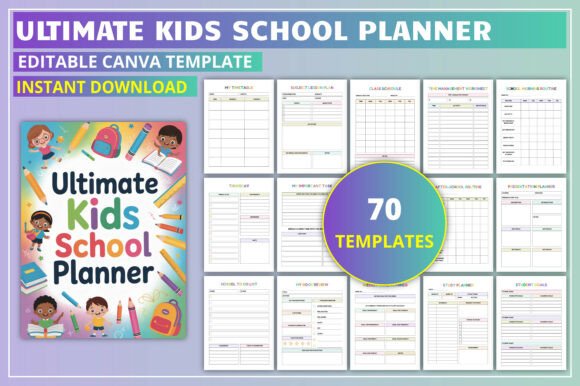
Ultimate Kids School Planner
A new school year brings excitement, fresh supplies, and the inevitable challenge of keeping everything on track. Between classes, homework, extracurriculars, and down time, children face a lot to remember. The Editable Ultimate Kids School Planner offers a practical solution that combines structure with creative freedom. Designed for students, parents, teachers, and homeschoolers, this printable planner helps build organizational habits while remaining flexible enough to adapt to any family or classroom.
What makes this planner different
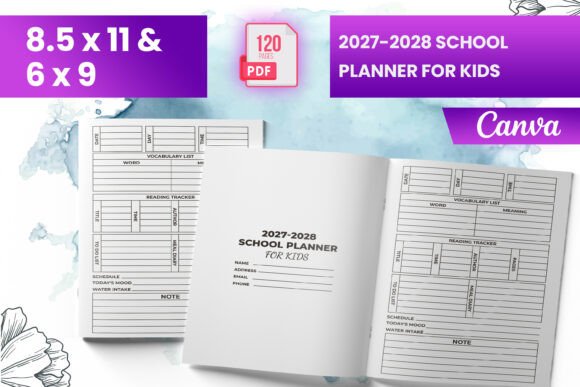
Many planners focus only on dates and deadlines. This one takes a broader view of a child’s day. Beyond traditional scheduling pages, it includes a physical activity log, daily mood tracker, food tracker, book review pages, and a weekly goal planner. These sections encourage children to reflect on their wellbeing, not just their assignments. The result is a tool that supports the whole student—academic, emotional, and physical.
The format is clean and kid-friendly without feeling childish. Older students appreciate the mature layout, while younger children enjoy the checklists and visual structure. Because the planner comes as an editable Canva template, adults can adjust colors, fonts, and images to suit a child’s preferences or a brand’s identity. This flexibility makes it equally useful for personal use and for small business owners who sell custom planners on platforms like KDP.
How the planner solves real organizational problems
Children often struggle with transitions between school, home, and activities. A single missing assignment or forgotten permission slip can create stress for the whole family. The Editable Ultimate Kids School Planner addresses these pain points directly by providing dedicated spaces for every part of a student’s routine.
A central home for school information
Instead of sticky notes scattered across the kitchen counter or reminders lost in a backpack, the planner becomes one trusted place. The belongs to page makes it personal, while the timetable, class schedule, and yearly overview give students a big-picture view of their commitments. When a child can see their entire week at a glance, planning feels less overwhelming.
Breaking down big tasks into manageable steps
The assignments tracker and homework tracker help students divide larger projects into smaller pieces. For example, a science fair project that spans three weeks becomes less intimidating when broken into research, experiment setup, data collection, and presentation preparation. The weekly goal planner reinforces this habit by encouraging children to set one or two realistic targets each week.
Building routines that stick
Morning and evening checklists turn chaotic hours into predictable routines. A child can check off brushing teeth, packing their bag, or reading before bed without needing constant reminders from a parent. Over time, these checklists become automatic habits. The daily mood tracker adds a gentle check-in that helps parents notice patterns—perhaps a child consistently feels anxious on days with a math test or tired after soccer practice.
Who benefits from using this planner
The design intentionally serves multiple audiences, which is why it appears in classrooms, home offices, and online shops around the world.
Parents managing busy households
For parents juggling multiple children’s schedules, the monthly and yearly planners offer a bird’s-eye view. You can track school events, travel itineraries, and important tasks without flipping through several different apps or calendars. The library tracker and books I want to read list also make trips to the library more intentional—your child arrives with a list rather than wandering aimlessly.
Teachers and homeschoolers
Educators can use the lesson plan and subject lesson plan pages to outline weekly topics and daily activities. The class list and grade tracker help monitor progress across an entire group or individual students. Homeschooling parents especially appreciate the reading log and book review sections, which transform casual reading into a structured learning activity without killing the joy of a good story.
Small business owners and content creators
Stationery shop owners can purchase the template, customize it with their branding, and sell it as a unique product. Because the Canva link is editable, you can change everything from the cover design to the internal page colors. This allows sellers to create multiple variations—a unicorn theme for one listing, a space theme for another—without starting from scratch each time. The KDP-ready format means the interior file is already optimized for print, saving hours of formatting work.
Practical ways to start using the planner today
Getting started does not require an elaborate system. Here are realistic approaches based on how families and educators actually use this tool.
- Start with one section. Instead of filling out every page immediately, begin with the daily schedule and homework tracker. Add the mood tracker and food tracker after a week or two, once the initial habit feels natural.
- Involve your child in customization. Let them choose colors or add stickers to the daily planner pages. When a child has ownership over their planner, they are more likely to use it consistently.
- Use the monthly planner as a family calendar. Hang it on the refrigerator or keep it in a shared binder. Everyone can see upcoming school events, travel plans, and important deadlines at a glance.
- Pair the reading log with library visits. Each time your child finishes a book, they fill out a review page. This turns reading into a rewarding habit rather than a required chore.
- Review the weekly goal planner together on Sunday evenings. Discuss what went well the previous week and set one or two goals for the week ahead. This simple ritual builds reflection skills over time.
What to consider before choosing this planner
No single tool works for every child, and being aware of a few practical details helps you decide if this planner fits your situation.
Age and independence level
Children around ages six to twelve typically benefit most from a structured planner, though older students also find value in the grade tracker and time management worksheet. Younger children may need help filling out pages at first. Expect to spend a few minutes each evening reviewing the daily schedule together until the routine becomes automatic.
Printing and digital use
The planner is designed to be printed, but you can also use it digitally on a tablet with a note-taking app. If you choose to print, consider using a binder so you can add or remove pages as needed. Thick paper works best for pages that children will write on frequently, such as the daily planner and class notes.
Customization learning curve
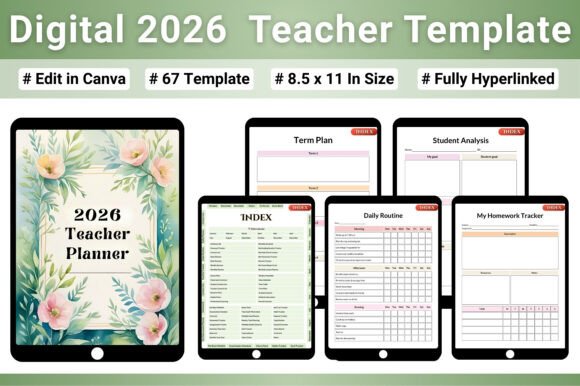
Editing the Canva template requires a free or pro Canva account. Basic edits like changing colors and fonts are straightforward, even for beginners. More advanced changes—such as rearranging entire sections—take a little practice. Canva offers tutorials and templates that make the learning process manageable for most adults.
Consistency over perfection
The planner works best when used regularly, even if some days are skipped. Missing a week does not mean the tool has failed. Encourage your child to pick up where they left off rather than feeling pressured to backfill every empty page. The goal is building habits, not completing a perfect record.
Why organization matters for children’s confidence
Academic success is only part of the picture. When a child knows what to expect each day, they enter the classroom with less anxiety and more focus. The morning checklist reduces frantic searches for missing homework. The assignment tracker eliminates the surprise of a forgotten project. Over time, these small wins build a sense of competence that spills over into other areas of life.
The mood tracker and physical activity log add a layer of self-awareness that many children lack the vocabulary to express. A child who notices they feel happier on days they play outside can make intentional choices about how they spend their free time. This kind of reflection is a skill that serves them well into adulthood.
The Editable Ultimate Kids School Planner is not just about getting through the school year. It is about teaching children that their time, their emotions, and their goals are worth paying attention to. When you provide that structure in a format that feels personal and adaptable, you give them a foundation they can carry forward long after the last page is filled.