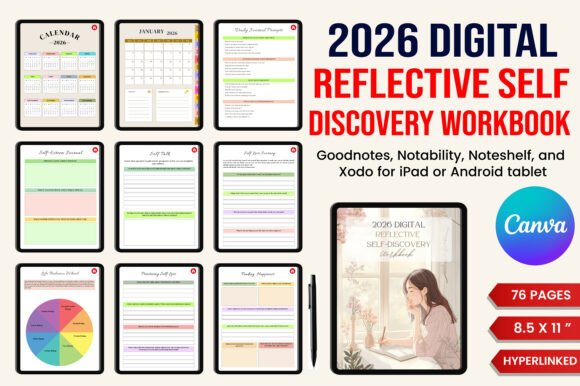
2026 Digital Reflective Self-Discovery
At the start of a new year, many of us feel a familiar pull—a quiet hope that this time, we’ll show up for ourselves more intentionally. Yet without a structure to guide us, those good intentions often fade by February. The 2026 Digital Reflective Self-Discovery Workbook offers exactly that missing framework: a space to slow down, ask honest questions, and track your growth across twelve months. It’s less about rigid productivity and more about learning who you are becoming.
What makes this workbook different from a standard planner
Most planners focus on tasks and appointments. This one focuses on you—your inner landscape, your emotional patterns, and the quiet dreams you may have set aside. It blends daily journaling with self-care tracking, goal setting, and deep reflection exercises that gently guide you back to yourself. Instead of a blank page that can feel overwhelming, you’ll find thoughtful prompts that ask things like “What did I learn about myself this week?” or “What do I need right now?”
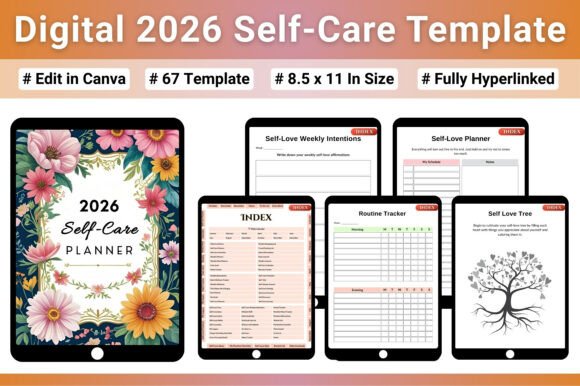
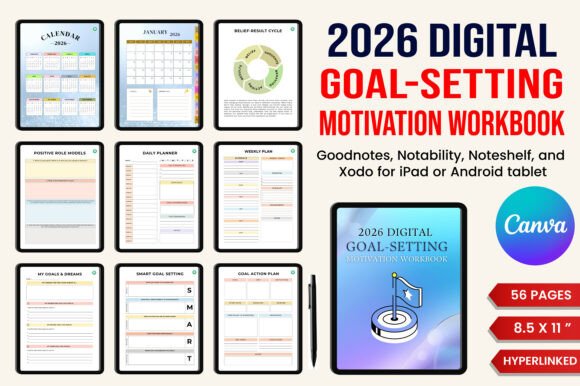
The workbook includes a 2026 full-year calendar, daily journal prompts, weekly reflection pages, and a dedicated self-esteem journal. It also features tools like the Life Balance Wheel, a mood tracker, a sleep tracker, and a self-care menu where you can list small pleasures that recharge you. These aren’t just buzzwords—they’re practical anchors that help you notice patterns and make kinder choices.
Who might benefit from this kind of guided reflection
Adults in their twenties through fifties often carry overlapping responsibilities—career growth, relationships, creative projects, or caring for others. In the middle of all that, it’s easy to lose touch with your own needs. If you’ve ever felt burned out, unsure of your next step, or simply disconnected from yourself, this workbook provides a gentle way back. It’s also helpful for anyone who has tried journaling before but struggled to stick with it, because the structure removes the guesswork.
Entrepreneurs, freelancers, and small business owners might appreciate the space to separate personal growth from professional pressure. Bloggers and content creators could use the reflection pages to clarify their voice and long-term vision. Educators and professionals who support others will find that tending to their own emotional wellness helps them show up more fully for their work.
A tool for emotional wellness and clarity
One of the workbook’s standout features is how it weaves together different dimensions of self-care. The Self-Love Journey and Self-Talk pages invite you to notice how you speak to yourself—especially on hard days. There’s a section for writing a Self-Love Letter, which can feel awkward at first, but becomes surprisingly meaningful over time. These exercises are designed to rebuild the kind of inner trust that makes decision-making feel clearer.
The Life Audit Analysis and Core Beliefs pages help you examine old stories that may be holding you back. For example, you might discover a belief like “I’m not good at finishing things” shows up repeatedly, and then gently explore where that came from and whether it’s still true. That kind of awareness is powerful—not because it changes everything overnight, but because it gives you a starting point.
How to use the workbook in real life
You don’t need to set aside hours each day. Many people use the daily journal prompts in the morning with coffee, or as a wind-down ritual before sleep. The weekly reflection pages let you review what went well and what felt heavy, which builds a habit of self-compassion rather than self-criticism.
Here are a few realistic ways to weave it into your routine:
- Morning check-in: Open to the daily journal prompt and write for five minutes. No pressure to produce deep insights—just let words flow.
- Sunday planning session: Use the weekly reflection and goal-setting pages to look ahead with intention.
- Self-care reset: When you feel off, turn to the Self-Care Checklist or Mood Tracker to notice what’s missing.
- Bucket list dreaming: The Travel Bucket List and My Desires pages are perfect for low-stakes brainstorming when you need a lift.
Because it’s digital, you can keep it on your phone, tablet, or laptop—making it easy to access during a lunch break or while traveling. You can also print sections you want to revisit by hand.
Beginner-friendly use cases that build confidence
If you’re new to structured self-reflection, start with the “Who Am I” and “My Identity” pages. They’re straightforward: you list things you enjoy, values you hold, and qualities you appreciate in yourself. That might sound simple, but for many people, naming those things out loud feels surprisingly grounding.
Another gentle entry point is the “Practicing Self Love” section, which offers small, actionable ideas rather than abstract concepts. You might try listing one thing you did well today, or write down a kind phrase you needed to hear. Over weeks, these small practices begin to shift your internal dialogue.
Important things to consider before starting
No workbook can replace professional mental health support, and that’s worth acknowledging. If you’re navigating deep trauma or clinical depression, a guided journal can be a helpful companion—but it should never be seen as a substitute for therapy. Use it as a supplement to your existing coping tools, not a replacement.
It’s also okay if some sections feel irrelevant at first. You don’t have to complete every page. One of the strengths of this workbook is that you can skip around based on what you need that day. Maybe you’re not ready to examine your core beliefs, but the Sleep Tracker feels safe and useful. That’s fine. Self-discovery isn’t a race.
Consider your digital comfort level as well. The workbook is designed for use in apps like GoodNotes, Notability, or any PDF annotation tool. If you’re new to digital planning, give yourself a week to get comfortable navigating the sections. Most people find it intuitive after a few tries.
Practical observations from real use
People who use this workbook consistently often mention two things. First, they notice subtle shifts in how they talk to themselves—less harsh, more patient. Second, they start to recognize patterns they’d previously overlooked, like how certain moods correlate with sleep quality or skipped self-care.
The “Your Accomplishments” and “Self Evaluation” pages can be particularly meaningful at the end of the year. Looking back on a messy, imperfect journey—and seeing evidence of growth you didn’t notice in the moment—builds a kind of confidence that external achievements rarely provide. That’s the deeper work this workbook supports: not becoming someone new, but remembering who you already are.
Where this fits into a broader self-discovery practice
Digital reflective self-discovery doesn’t have to be the only tool you use. Many people pair this workbook with therapy sessions, meditation apps, or creative hobbies like drawing or music. The prompts can also inspire conversations with trusted friends or partners—sharing a “Self Love Journey” insight over dinner can deepen relationships in unexpected ways.
If you’re a coach, educator, or group facilitator, you might adapt certain pages for workshops or client check-ins. The “Life Balance Wheel” and “Your Personal Mission” pages offer accessible starting points for guided discussions about values and direction.
Final thoughts on choosing this workbook
The 2026 Digital Reflective Self-Discovery Workbook stands out because it treats self-awareness as a practice, not a product. You won’t finish it in a weekend and feel magically transformed. Instead, it offers a gentle rhythm—a way to check in with yourself week after week, even when life feels scattered. If you’re ready to invest a few minutes most days in understanding your own heart a little better, this is a tool that will meet you where you are.