Digital 2026 Nurse Template: A Structured Planner for Shift Work and Self-Care
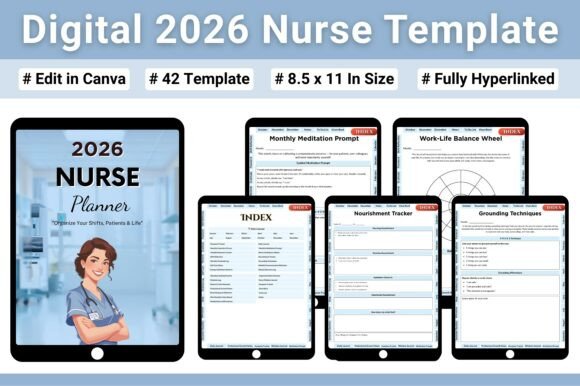
Healthcare professionals face a unique set of scheduling and emotional demands. Between rotating shifts, patient care responsibilities, and the need for personal wellness, maintaining organization can feel like an additional burden. The Digital 2026 Nurse Template positions itself as a practical response to that challenge—a 42-page hyperlinked planner designed specifically for nurses, caregivers, and healthcare workers who want to manage their schedules, track their well-being, and preserve work-life balance using a digital format.
Rather than a generic calendar or a paper notebook, this template combines shift logging, monthly planning, mindfulness prompts, and reflection tools into a single PDF that works with apps like Goodnotes or Notability. Whether you use an iPad, a tablet, or a desktop, the structure is reusable year after year, which changes how you think about long-term planning investment.
What Makes the Digital 2026 Nurse Template Worth Considering
The core strength of this template lies in its integration of professional logistics and personal care. Most shift planners focus on the schedule alone—what time you work, which unit you are on, when your days off fall. This template goes further by pairing those practical elements with sections dedicated to mindfulness, energy tracking, and gratitude journaling. That combination is uncommon in digital planners aimed at healthcare workers.
The hyperlinked navigation is another practical feature. The clickable index lets you jump from the main menu to any month, shift log, or wellness tracker without scrolling through pages manually. For someone who needs to check tomorrow's schedule while on a quick break, that speed matters. The fact that the template includes the full 2026 calendar plus individual monthly pages from January through December means you have a year of structure in a single download, which reduces the need to seek out separate resources for different months.
Key Characteristics and Purpose of the 42-Page Layout
The template is organized into three functional areas: the calendar and planning section, the mindfulness and self-care pages, and the shift reflection and work-life balance trackers. Each serves a distinct purpose.
The calendar section covers the entire 2026 year. You get a full-year overview for seeing holidays, vacation time, and major schedule patterns at a glance. Monthly pages follow, each with space for notes, goals, and to-do items. That structure is clean and predictable—you always know where to find a given month.
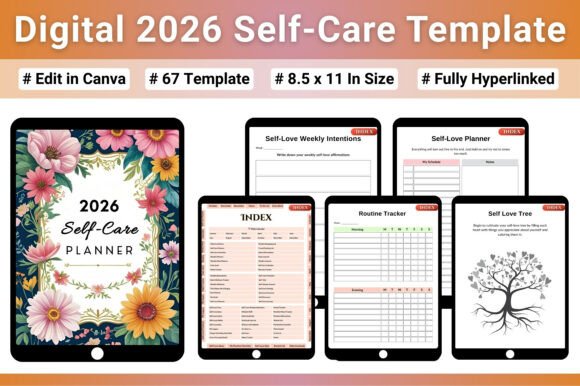
The mindfulness and self-care pages include monthly intention focus pages, an on-shift/off-shift self-care menu, a mindful moments tracker, meditation prompts, and a gratitude and kindness journal. These are not afterthoughts. They are integrated as regular checkpoints, which encourages consistent use rather than occasional visits when you feel overwhelmed.
The shift reflection and work-life balance section contains daily shift reflection pages with energy and emotion check-ins. This is where the template moves beyond scheduling into actual self-monitoring. Tracking how you feel before, during, and after a shift can reveal patterns you might otherwise miss—like which rotation leaves you most depleted or which day of the week tends to correlate with better emotional energy.
Real-World Use: How the Template Performs in Practice
For a nurse working twelve-hour shifts on a rotating schedule, the practical value becomes clear within the first week. The hyperlinked structure reduces friction. Instead of flipping through a paper planner or tapping through unlinked pages, you land on the exact section you need in a single tap. That may sound like a minor convenience, but when you are tired, every extra step matters.
The shift reflection pages serve as a low-friction log. You can fill out energy and emotion check-ins in under two minutes. Over time, that data becomes useful for identifying which shifts or work conditions drain you most. It also provides a record you can refer back to when discussing workload or schedule adjustments with supervisors or when evaluating whether your current role supports your well-being.
The self-care menu—split between on-shift and off-shift options—offers a practical, non-prescriptive framework. It does not tell you what to do. Rather, it gives you space to list what actually works for you, which respects the fact that self-care is personal and context-dependent. A nurse working nights may need different recovery strategies than one working days, and this format accommodates that variation.
One realistic limitation is that the template is a PDF, not a standalone app. It does not automatically sync across devices or send reminders. You need to use it within a PDF annotation app. If you prefer a planner that pushes notifications or integrates with your phone calendar, you will need to adapt the template manually. That said, for anyone already using Goodnotes or Notability, the workflow is seamless.
Quality, Usability, and Flexibility of the Design
The template is a digital PDF file, which means quality depends on the structure of the hyperlinks, readability of the layout, and clarity of the sections. Based on the described features, the navigation appears well-thought-out. A clickable index with direct links to shift logs, wellness trackers, and monthly calendars eliminates the frustration of tapping through dozens of pages to find what you need.
Usability is strong for anyone familiar with digital planners. If you are new to PDF planners, there is a short learning curve—mostly understanding how to tap links and use text tools in your annotation app. Once you set up the first month and log a few shifts, the rhythm becomes natural.
Flexibility is a notable advantage. Because the template is reusable year after year, you are not locked into a one-time-use purchase. You can duplicate the file for each new year, archive old logs for personal reference, and modify sections to fit your evolving needs. That kind of adaptability is rare in paper planners or single-year digital products.
Consistency across pages is evident. The layout uses the same visual language for monthly calendars, reflection logs, and trackers. That coherence makes it easier to navigate without thinking too hard about where things are—a genuine benefit when your mental energy is already in demand.
Who Benefits Most from This Planner
The primary audience is clearly nurses, but the template is relevant for a broader range of healthcare professionals. Nursing assistants, paramedics, respiratory therapists, and other shift-based caregivers would find equal value in the schedule tracking and reflection pages.
Beyond direct patient care, anyone working irregular or rotating hours—such as emergency dispatchers, residential support staff, or even freelance professionals managing unpredictable workloads—could use the structure for shift logging and energy tracking. The mindfulness and self-care sections are not role-specific, so they apply to any profession where emotional regulation and burnout prevention matter.
For those who frequently switch between day and night schedules, the template provides a central place to track those transitions. Without a system, it is easy to lose track of how many night shifts you worked in a row or when your next day off actually falls. The monthly calendar with note sections helps clarify that at a glance.
People who already use digital planning apps will find the template easy to adopt. Those who prefer paper may need to decide whether the hyperlinked navigation and reusability justify switching formats. For some, the tactile experience of a paper planner remains preferable. But for anyone juggling multiple devices or who wants the ability to search their logs using the annotation app's tools, the digital version offers clear advantages.
Practical Considerations and Possible Limitations
No single planner fits every workflow. The Digital 2026 Nurse Template assumes you are comfortable with PDF annotation tools and have a device that supports them. If you work in a setting where you cannot carry a tablet or use a laptop during breaks, you may need to log information at home rather than in real time. That delay can reduce the accuracy of energy and emotion check-ins, though you can still complete them based on memory at the end of the day.
The template does not include built-in habit tracking or medication logging, which some healthcare workers may want. It focuses on shift reflection, scheduling, and mindfulness. If you need a more comprehensive system that includes patient notes or clinical logs, you would need to supplement this template with additional resources.
Reusability is a strong selling point, but it does require you to duplicate the file each year and clear previous entries. For organized users, this is straightforward. For others, it is worth setting a reminder at the start of January to create your fresh copy.
The mindfulness prompts are structured but not overly directive. Some users may prefer more guidance or specific exercises. Others will appreciate the open-ended format that leaves room for personal interpretation. Your preference depends on whether you want a prescriptive self-care program or a flexible container for your own practices.
Long-Term Value and Overall Assessment
The Digital 2026 Nurse Template offers a durable solution for professionals who want to organize their work schedules while staying attuned to their own mental and emotional health. The integration of shift planning, reflection, and mindfulness under a single navigation system reduces the friction that usually comes with managing multiple tools or notebooks.
Its strongest contribution is the shift reflection and energy tracking component. That feature turns the planner into a personal data log that can inform better decisions about workload, rest, and career fit over time. For anyone working in a demanding, shift-based role, that kind of longitudinal self-awareness is valuable.
The template is not trying to replace a full digital ecosystem or clinical toolset. It focuses on a specific intersection—work schedule management and personal well-being—and does that well. For healthcare professionals who already rely on digital planning and want a dedicated space for both logistics and self-care, it is a practical, thoughtfully structured resource worth exploring.