The 2026 Budget Planner: A Strategic Framework for Financial Clarity
Managing personal or business finances often feels like trying to navigate without a map. You know where you want to go, but the path is unclear. The 2026 Budget Planner exists to change that. More than a collection of trackers, this planner is a structured system that turns abstract financial goals into concrete, actionable steps. When you pair this planner with the flexibility of a customizable Canva KDP Interior, you gain both a tool and the freedom to shape it to your exact needs.
For anyone serious about financial outcomes, the difference between intention and execution comes down to process. A budget planner provides that process. It removes guesswork, replaces hope with verification, and gives you a repeatable method for evaluating progress month after month. The 2026 version is specifically designed for the calendar year ahead, making it timely and relevant for anyone planning their finances from January through December.
Why a Structured Budget Planner Matters for Long-Term Results
Most people know they should budget. Fewer people actually do it consistently. The barrier is rarely a lack of desire; it is usually a lack of a usable system. A generic spreadsheet or a mental note system fails because it lacks structure and accountability. A dedicated planner like the 2026 Budget Planner solves this by providing pre-designed frameworks for every major financial category you need to track.
Consider the difference between tracking expenses on a napkin versus using a dedicated expense tracker with two pages of organized categories. The second approach encourages completeness, reduces errors, and makes it far easier to spot patterns. When you have a tool that is built for the task, you are more likely to use it. And when you use it consistently, your financial decisions become more deliberate, less reactive.
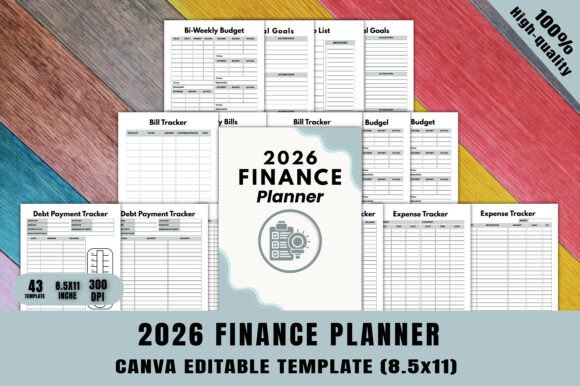
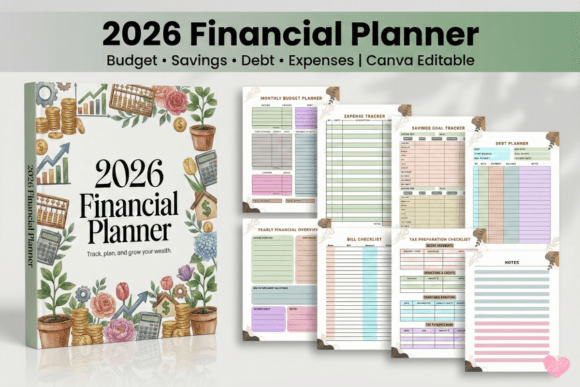
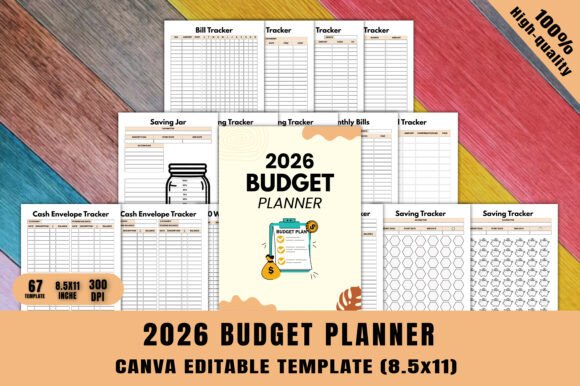
This planner includes over two dozen different trackers and planners, each serving a distinct purpose. From an income tracker to a debt payment tracker, from a savings jar to a sinking funds tracker, every component addresses a specific financial behavior. Using them together creates a comprehensive picture of your financial life. That picture is what enables better decisions.
Translating Goals into Daily and Weekly Actions
A goal without a plan is just a wish. The 2026 Budget Planner helps you bridge that gap by breaking down your annual goals into monthly, biweekly, and weekly budgets. The monthly budget spreads across two pages give you room to plan detailed categories. The weekly budget keeps you on track in shorter intervals, which is crucial for maintaining momentum.
For example, if your goal is to save for a down payment by December 2026, you can use the savings tracker and the 50-week savings challenge to map out exactly how much needs to be set aside each week. The sinking funds tracker then allows you to allocate funds for specific future expenses without disrupting your regular budget. This layered approach makes large goals feel manageable and ensures that progress is visible every week.
Entrepreneurs and freelancers especially benefit from this structure. Irregular income makes cash flow unpredictable. The paycheck budget and bi-weekly budget templates help you allocate each incoming payment intentionally, rather than crossing your fingers and hoping you have enough at the end of the month. The cash envelope tracker adds another layer for those who prefer a tangible method of controlling spending in specific categories.
Using the Canva KDP Interior to Customize Your Financial System
One of the most strategic advantages of this product is its format. The 2026 Budget Planner comes as a customizable Canva file, which means you are not locked into someone else's design choices. You can adjust colors, fonts, layouts, and even the content itself to match your personal brand, your business identity, or simply your aesthetic preferences. This is not a cosmetic luxury; it is a practical advantage.
When you customize a tool to reflect your own thinking, you are more likely to use it consistently. If the planner looks like it belongs to you, if the categories match your actual spending habits rather than generic ones, the tool becomes an extension of your decision-making process. For KDP publishers and Etsy sellers, this customizability also means you can rebrand the interior for multiple niche audiences, saving significant time and resources compared to designing from scratch.
Business owners and creators can use the editable template to add their logo, adjust the color scheme to match their brand, and even modify tracker categories to fit their specific business expenses. The same product can serve as a personal finance tool for you and a sellable product for your customers. That dual utility is rare and valuable.
What Sets This Planner Apart from Generic Templates
The breadth of included trackers is worth examining closely. Many budget planners stop at monthly and weekly budgets. This planner goes further with a holiday budget, an online shopping tracker, a no-spend tracker, a debt payoff tracker, and a financial goals page. Each of these addresses a specific financial behavior that often derails people when not managed intentionally.
For instance, holiday spending is a common source of budget stress. Using the dedicated holiday budget page early allows you to set aside small amounts over several months rather than feeling the crunch in November and December. The online shopping tracker helps you stay aware of a spending category that can easily become invisible when purchases are made with a single click. The no-spend tracker turns a vague intention into a concrete challenge with daily accountability.
The debt payment tracker and debt payoff tracker serve different but complementary purposes. The first helps you track individual payments to multiple creditors. The second shows your overall progress toward being debt-free. Having both keeps you focused on the micro and macro levels simultaneously, which is essential for maintaining motivation during a long payoff journey.
When to Use the 2026 Budget Planner for Maximum Impact
Timing matters. While you can start using any budget planner at any point, the 2026 Budget Planner is designed for the calendar year. The included 2026 calendar and monthly planners from January to December give you a built-in roadmap. The best time to start is before the year begins, ideally in late 2025, so you can set up your categories, input known expenses, and define your financial goals before January 1st.
However, if you are reading this mid-year, do not wait. Start with the current month. Fill in the expenses you have already incurred, then plan for the remainder of the month. The structure is flexible enough to accommodate a mid-year start. The important thing is to begin using the system rather than waiting for a perfect starting point.
For business owners, consider using the planner in tandem with your quarterly reviews. At the end of each quarter, review your income tracker, expense tracker, and savings tracker. Adjust your budgets for the next quarter based on actual performance. This iterative process turns budgeting from a static exercise into a dynamic management tool.
Strategic Considerations Before You Begin
Before printing or publishing your customized planner, take time to think about your specific financial goals. The planner will not set your priorities for you. It is a tool, not a decision-maker. If you start tracking without knowing what you are working toward, you risk collecting data without taking action. Define one to three primary financial goals for 2026. Write them on the financial goals page. Use those goals to guide how you allocate money across the various trackers.
Another consideration is consistency. A budget planner only works if you use it regularly. Set aside fifteen minutes at the same time each week to update your weekly budget, income tracker, and expense tracker. At the beginning of each month, fill out the monthly budget and review the previous month's spending. This routine builds the habit of financial awareness, which is the foundation of all good money decisions.
For those selling this interior on KDP or Etsy, consider how to position the product for different audiences. A minimalist color scheme might appeal to professionals. A brighter, more playful design might suit younger users or those new to budgeting. The 100 customizable original Canva file allows you to create multiple versions from one base template, which is a smart approach to reaching different market segments without additional design work.
Possible Risks of Using a Budget Planner Without Clear Intent
No tool is risk-free when used without context. One common mistake is treating the 2026 Budget Planner as a compliance exercise rather than a decision-making tool. If you fill in numbers just to have them recorded, without reviewing or adjusting based on the data, the planner becomes busywork. You will have the appearance of control without the substance.
Another risk is overcomplicating the system. With so many trackers available, it can be tempting to use every page every month. That is not necessary. Focus on the trackers that directly support your current goals. If you have no debt, skip the debt payoff pages. If you do not use cash, ignore the cash envelope tracker. The tool should serve you, not the other way around.
For publishers selling this interior, there is a risk of customers not understanding how to use the various trackers together. Consider including a brief guide or example pages to show how the different sections connect. A customer who sees how the monthly budget feeds into the expense tracker and then into the savings tracker is more likely to find value in the complete system.
Practical Tips for Getting the Most Out of the Planner
Start with the income tracker. Know exactly how much money you expect to receive each month. Then move to the monthly budget and allocate every dollar to a category. Use the remaining trackers as supporting tools for specific areas you want to monitor closely. The bill tracker and monthly bills pages help ensure nothing slips through the cracks. The savings jar and 50-week savings challenge make saving visible and rewarding.
If you are using the planner for a business, customize the categories to reflect your actual expenses. Instead of a generic "shopping" category, break it out into inventory, office supplies, software subscriptions, and marketing. The online shopping tracker can help you separate personal from business purchases if you use the same card for both.
Review the financial calendar page at the start of each month. This page can be used to note bill due dates, income dates, and important financial deadlines. Having a single place to see everything reduces the cognitive load of remembering multiple dates and prevents late fees or missed opportunities.
Long-Term Value Beyond the 2026 Year
While the planner is designed for 2026, the habits you build using it will last far longer. The process of setting a financial goal, breaking it into monthly and weekly actions, tracking progress, and adjusting based on results is a skill that transfers to any year. Once you internalize this cycle, you can apply it to any financial objective, whether personal or professional.
For creators who sell this interior, the lasting value is in the system itself. Customers who find success with the 2026 version will return for future years if you offer updated editions. Building a loyal customer base around a well-designed budget planner is a strong long-term strategy for KDP and Etsy sellers. The customizable Canva file makes it easy to update the calendar and release new versions annually without redesigning from scratch.
Beyond publishing, the planner can support broader operational goals. If you run a small business, using the same tool for personal and business budgets helps you see the full picture of your financial health. That clarity supports better decisions about pricing, hiring, investing, and cash flow management. The planner becomes not just a budgeting tool but a strategic asset for your entire operation.
Making the Planner Work for Your Specific Context
The best way to use the 2026 Budget Planner is to approach it as a flexible framework rather than a rigid template. Start with the pages that address your biggest financial challenge. If overspending is your primary issue, focus on the expense tracker and no-spend tracker. If saving is your priority, lean heavily on the savings tracker, sinking funds tracker, and savings challenge. If debt is your main concern, the debt payment and debt payoff trackers will be your most used pages.
As you gain confidence with the system, incorporate more pages. By mid-year, you may find yourself using the holiday budget, upcoming expenses, and shopping list pages routinely. The planner scales with your needs. That scalability is what makes it suitable for everyone from a college student managing their first part-time job to a business owner overseeing multiple revenue streams.
For those who use multiple currencies or have complex income sources, the customizable Canva file allows you to adjust categories and labels to match your reality. Do not feel limited by the default setup. The template is a starting point, not a constraint. Use the editing capabilities to make the planner truly your own.
Ultimately, the 2026 Budget Planner is a means to an end. The end is financial clarity, intentional spending, and progress toward the goals that matter to you. Whether you use it personally, sell it to others, or both, the value lies in how it helps you or your customers make better decisions over time. Start with clear goals, use the system consistently, and let the data guide your choices. That is the path to results that last beyond any single year.